

Stargazing
Civil, Nautical and Astronomical Twilight: What Each Stage Means for Explorers
September 14, 2026
Civil, Nautical and Astronomical Twilight: What Each Stage Means for Explorers
Twilight is not a single event but a slow handover from day to night. For anyone heading out to watch the stars, follow a ridge or simply walk home under a darkening sky, the three official stages — civil, nautical and astronomical — mark genuine changes in what you can see and do. Knowing where the Sun sits below the horizon turns a vague sense of "getting dark" into a practical plan. It also tells you when to switch on a headtorch, when to stop navigating by sight alone, and when to expect the Milky Way to emerge. The differences are subtle at first, but once you learn to read them, every evening outside becomes more predictable.
How Twilight Works
Twilight is the interval before sunrise and after sunset when the Sun is below the horizon but its light still scatters through the upper atmosphere. The amount of scattering depends on the Sun's angle below the horizon, measured in degrees. The lower the Sun, the darker the sky. Three thresholds divide this period: 6°, 12° and 18°. Each has a name, a definition and a distinct character for explorers.
Think of the Sun as a dimmer switch moving steadily downward. At 1° below the horizon, the sky is still brilliantly lit. At 6°, shadows have merged and colours have cooled. At 12°, only the brighter stars remain visible. At 18°, the last trace of sunlight has left the sky, and true night begins. The sequence is the same everywhere on Earth, but the speed of the transition is not.
Civil Twilight: The Last Useful Light
Civil twilight runs from sunset until the Sun is 6° below the horizon. At mid-latitudes this often lasts around half an hour, though the exact duration shifts with the season and your latitude. The sky remains bright enough to read a map, see the path ahead and identify landmarks without a torch. Streetlights usually come on, and colours soften — the phase photographers call the blue hour.
For stargazers, only the brightest objects appear: Venus, Jupiter, Sirius, perhaps the Moon. If you are navigating on foot, this is the safest transitional light. Use it to confirm your position while features such as gates, cairns and field boundaries are still visible. If you are on a hill, the western horizon may still glow long after the land around you has darkened.
Civil twilight is also a social hour. In towns and cities, it is when commuters, dog walkers and runners share the paths. On a remote trail, it is the moment to ask a simple question: if I lose the path now, could I find it again without a light? If the answer is no, stop and take a bearing, mark a waypoint or turn on a headtorch before you need it.
Nautical Twilight: Where Horizon Meets Stars
Nautical twilight spans 6° to 12° below the horizon. The name comes from celestial navigation: at this stage the horizon stays just visible at sea while enough bright stars are out to take a sight with a sextant. On land, hills or buildings may hide the true horizon, but the principle holds — you can still make out the line where sky meets land, and the brighter stars and planets are clear.
This is a good window for learning constellations. The main patterns of Orion, the Plough or Cassiopeia stand out against a deep blue rather than a black sky. It is also when artificial light becomes necessary for fine work such as reading a compass bearing or a detailed map. Switch to a red torch now if you want to protect your night vision.
For sailors and sea kayakers, nautical twilight is a practical boundary. It is often the last stage in which unlit buoys, headlands and other vessels can be distinguished against the water without radar or electronics. Once nautical twilight ends, the sea and sky merge into a single dark mass, and navigation depends on instruments, lights and careful plotting.
Astronomical Twilight: The Faintest Glow
Astronomical twilight covers 12° to 18°. The sky is dark enough for most stars to appear, but a faint glow remains near the horizon and the background sky is still slightly brighter than true night. Faint objects — the Milky Way, nebulae, galaxies, the zodiacal light — need the Sun to be at least 18° below the horizon. That point marks the end of astronomical twilight and the start of full darkness.
In practical terms, if you want to see the Andromeda Galaxy or trace the dust lanes of the Milky Way, wait until astronomical twilight has ended. The difference between 12° and 18° can be surprisingly large for deep-sky observing, especially if you are near a town where light pollution already lifts the sky background.
Astronomical twilight is also forgiving if you are setting up equipment. There is still just enough light to see tripod legs, cables and camera dials without blinding yourself with a white torch. Use this period for polar alignment, focusing and framing before full darkness arrives.
Why Latitude and Season Change Everything
Twilight duration depends on your latitude and the time of year. Near the equator the Sun drops almost vertically, so each phase passes quickly. At higher latitudes the Sun's path is shallower, and twilight can stretch for hours. In the UK, summer evenings in northern Scotland may never reach astronomical twilight; the sky stays a deep blue all night. Around the solstice, London and much of southern England also miss full astronomical darkness, which limits stargazing to the Moon and bright planets.
Winter offers the opposite: long nights and generous astronomical twilight, but also cold and early darkness. Use an almanac or a reliable app to check the times for your exact location and date, not just your nearest city. A coastal headland and an inland valley twenty miles apart can see noticeably different twilight windows.
Twilight is local. The clock tells you when the Sun sets, but the landscape, the season and your latitude decide what happens next.
What This Means for Your Kit and Habits
Twilight affects three things: what you can see, how you navigate and how your eyes adapt. A few habits make the transition easier.
- Carry a red torch or headtorch: White light destroys night vision for several minutes. Red light lets you read a map or check a compass while keeping your pupils adapted.
- Know the twilight times before you leave: Write them down or screenshot them. Phone batteries die, and a cold evening drains them faster than expected.
- Layer up before you stop: Temperatures often fall quickly after sunset. Add a midlayer during civil twilight, not after you start shivering.
- Mark your route early: Use civil twilight to note junctions, cairns, streams and escape routes. By nautical twilight, fine detail is harder to see.
- Give your eyes 20 to 30 minutes: True dark adaptation takes time. Avoid white light and bright screens once astronomical twilight begins.
A Sample Twilight Timeline for an Evening Out
Suppose you are heading to a hilltop for stargazing. A simple plan might look like this.
- Before sunset: Arrive, check the weather, eat, drink and set up camp or your observing position.
- Civil twilight: Walk the final section, identify landmarks and take photos of the fading light. Switch on a red headtorch if you need to handle small items.
- Nautical twilight: Learn one or two constellations, check your compass and prepare your telescope or binoculars. This is a good time to make a hot drink.
- Astronomical twilight: Begin deep-sky observing as faint stars appear. Let your eyes adapt and avoid white light.
- True night: Observe the Milky Way, galaxies and nebulae. If the Moon is up, use the time for lunar detail instead.
Twilight for Photographers and Wildlife Watchers
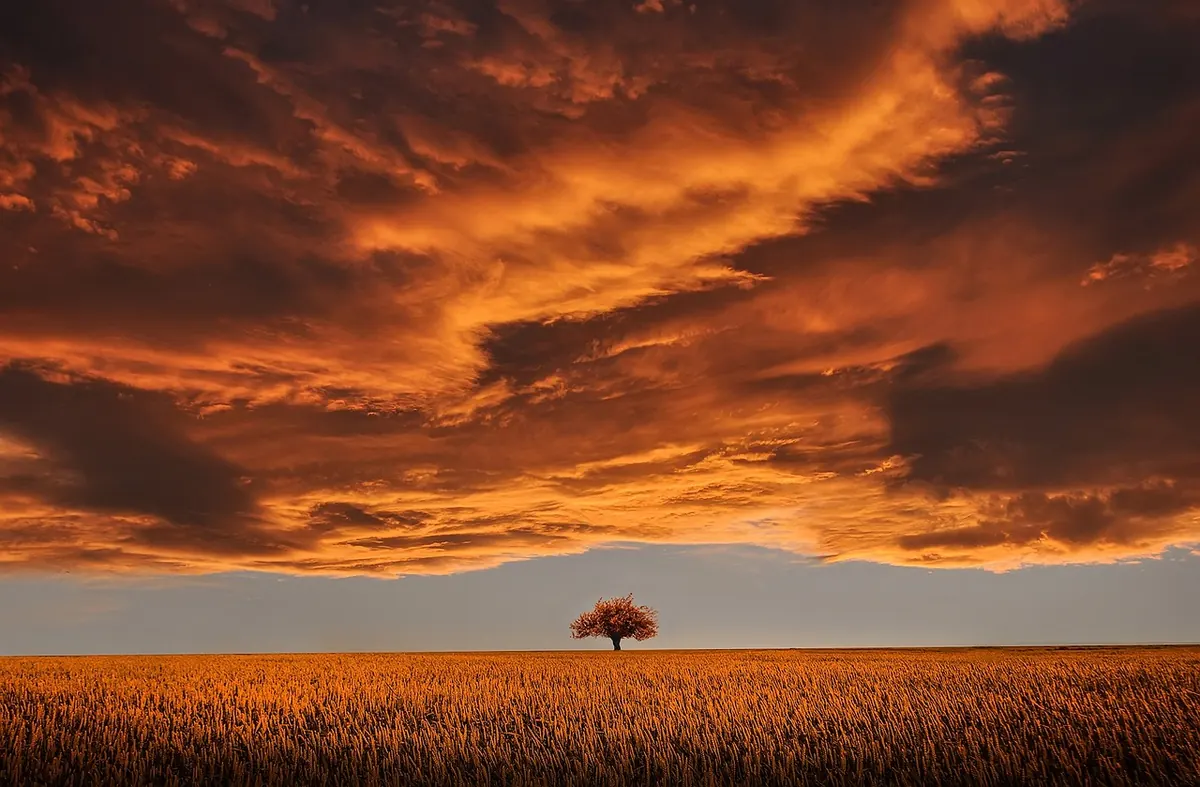
Photographers often chase civil twilight for its soft, even light and rich blue skies. A long exposure can turn moving water or clouds into smooth bands. During nautical twilight, the contrast between a still-glowing horizon and a dark sky can make silhouettes of trees, mountains or city skylines especially striking. By astronomical twilight, the stars begin to register, but the remaining glow near the horizon may still wash out faint constellations.
Wildlife watchers should also note the stages. Many birds sing most intensely at civil twilight, while bats, moths and nocturnal mammals become active around nautical and astronomical twilight. Deer and foxes often move at the boundary between light and dark, using the cover of fading visibility. If you are watching wildlife, keep a respectful distance and avoid bright lights that can disturb animals.
Common Mistakes to Avoid
- Assuming sunset is the end of useful light: You usually have at least 30 to 60 minutes of practical light after sunset.
- Using a white torch too early: It may feel helpful, but it can ruin your night vision and those of others around you.
- Ignoring the horizon: Even during astronomical twilight, a bright glow may remain in the direction of sunset, masking faint objects.
- Trusting a single forecast: Twilight times vary by location. Check the exact coordinates and date, not just the nearest town.
Understanding civil, nautical and astronomical twilight gives you more than a set of definitions. It gives you a schedule for safety, a guide for better stargazing and a way to move through the evening with confidence. Whether you are on a mountain ridge, a coastal path or a city park, the sky is always telling you what stage of the night you are in. Learn to read it, and you will never be caught out by the dark.
Photo: Bessi / Pixabay
Related posts
More stories you’ll love reading